Syllabus
🗺️ Course overview
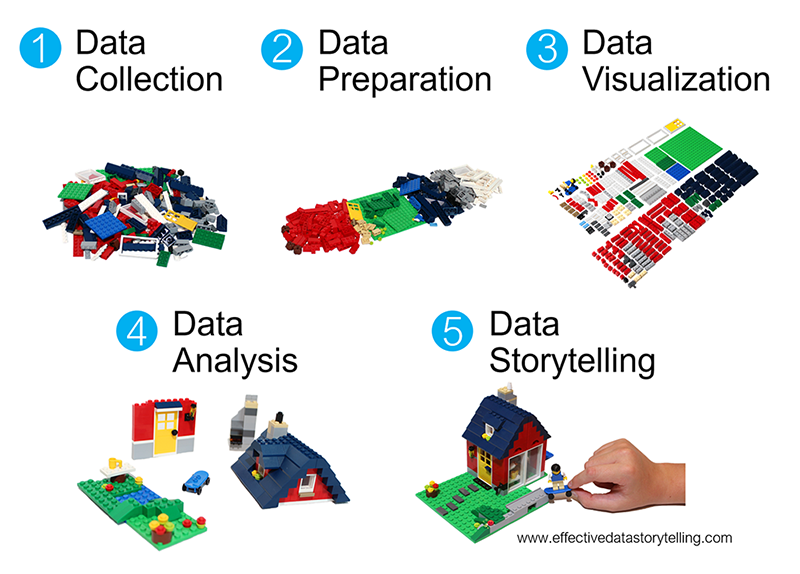
Data Science (DS) provides a powerful new approach to understanding complexity in social life, the natural world, the humanities, and beyond. Consistent with the liberal arts mission, DS embraces the need for a continuous interdisciplinary cycle that alternates between question formulation, data exploration, and domain insight. Examples of the myriad disciplines in which these methods find application include computational linguistics, data-driven journalism, data-driven educational policy making, political analytics, bioinformatics, and environmental studies. In COMP/STAT 112, you will develop the computational thinking, data communication skills, and ethical practices needed to turn a pile of data into a set of meaningful insights:
🎯 Learning goals
By the end of this course you should be able to:
- Sustain a reflection practice
- Reflect on your learning process so that you are equipped for independent learning
- Reflect on your collaborative work so that you can develop community no matter where you go
- Create effective visualizations
- Create a variety of visualizations in ggplot2
- Wrangle arbitrarily messy data
- Use appropriate R tools to manage and clean data
- Craft high quality data stories
- Iterate on the question-explore-question cycle to craft compelling data stories with attention to data context and ethical considerations
- Use a combination of data acquisition, data wrangling, and visualization to further a data science investigation
- Use AI and search tools to figure out difficult tasks
- Use appropriate coding jargon to construct effective search queries (e.g., Google) and evaluate the accuracy of results that you find
- Construct effective AI prompts (e.g., Chat GPT, Google Bard) and evaluate the accuracy of generated results
- Articulate the ethical and environmental considerations in using AI and search tools
Hello, and welcome to a new adventure!
I’m excited to spend the next 15 weeks with you cultivating data skills that can be quite empowering and, importantly, fun! I hope by the end of the semester that you’ll be seeing data and your relationship with it in new ways.
I want you to have a great learning experience in this course. To do that, we’ll need to work together and communicate with each other to ensure that your needs and the needs of your peers are being met. If something about the course is not working, please let me know as soon as possible.
For some of you, this is your first time working with data; some of you have hands-on experience working with data in other settings. Some of you may have taken other STAT or COMP courses already; most of you have no experience with programming languages. You each bring a unique set of strengths and experiences that form the seeds of a great learning community, and I am committed to helping everyone thrive.
Let’s have a wonderful semester together!
Dan
✉️ Course communication
Meet the instructional team
Your instructor: Dan Drake

About me: my background is in math, and I spent many years as a math professor; I then worked for almost 10 years for Epic in the Madison, Wisconsin area. I like walking/hiking. I read a lot, especially science fiction. I do lots of origami and crochet; both have a very mathematical quality that I really like.
My co-instructor, who teaches the other two sections:

Leslie Myint (lez-lee mee-int) (she/her)
About me: Outside of teaching statistics and data science at Mac, I am an environmental activist passionate about zero waste, clean energy, transportation, and the justice issues that touch these areas. My hobbies include coloring, sketch journaling, board games, Nintendo games, weightlifting, and dancing.
Preceptors
We will have 4 wonderful preceptors helping us this semester! Information will be posted on our course Moodle page.
The preceptor drop-in hours will be listed on this 112 Preceptor Office Hours Google Calendar.
R/RStudio Preceptors
We have the help of 2 R/RStudio preceptors who help students across different MSCS courses on R/RStudio-specific questions rather than course concepts. The R/RStudio preceptor drop-in hours will be shown on this MSCS Events Google Calendar and also on the calendar at the top of our course Moodle page.
The role of an MSCS preceptor is to help students with content questions, assist in the navigation of available resources, advise on studying approaches for classes, and assist with concepts, tools, and skills needed for problem sets. Students are accountable for their own learning; as such, preceptors are not allowed to share answers to assignments (unless specifically directed by the instructor), are not expected to immediately know the right approach, or provide assistance outside of office hours. Additional guidelines and expectations on how to interact with preceptors can be found here.
Contacting me
Please email me (ddrake1@macalester.edu) with any personal or academic concerns. I will do my best to respond within 24 hours on weekdays and 48 hours on weekends. For content questions, I encourage you to post in our Google Chat space (see below).
Office hours
Why: Office hours (drop-in hours / student hours) are a great time to talk about this class, career planning, or life in general. I love getting to talk with you outside of class time, so please come chat! You should plan to attend my office hours at least once in the semester. If these office hour times don’t work with your schedule, I’m available by appointment—email to set up a time to meet!
Where: OLRI 112 (121, if you must) – it’s near the stairs down to the first floor of OLRI.
When: in practice, you can just stop by my office; I’m around most of the day when I’m not teaching.
You can also(An appointment isn’t any kind of big deal, it’s really just a way to remind me to be in my office when you come by.)
Google Chat discussion space
We will be using Google Chat for announcements and Q&A throughout the semester. Use this link to join the space.
⭐️ Guiding values
Community is key
A sense of community and connectedness can provide a powerful environment for learning: Research shows that learning is maximized when students feel a sense of belonging in the educational environment (e.g., Booker, 2016). A negative climate may create barriers to learning, while a positive climate can energize students’ learning (e.g., Pascarella & Terenzini, cited in How Learning Works, 2012).
For these reasons, I design our in-class group activities to intentionally foster community and connectedness. You can help cultivate our classroom community by being thoughtful about the way you engage with others in class.
Active listening is vital
Research on learning theory and how the brain works has taught us that people learn best in community, when they feel safe, seen, heard, and cared about. Effective listening is a key part of this process.
How often do you find yourself coming up with a response and waiting to interject rather than listening to what an other person is saying? On the flip side, what do you need to feel heard and understood?
To feel connected in community, we need to practice turn-taking and active listening (fully engaged and trying to understand what someone is saying, rather than just listening to respond). I will ask you to discuss how you want to be listened to throughout the semester.
Reflection is paramount
The content you learn will be cool (unbiased opinion!), but it is a guarantee that as technology evolves, some part of it will become out-of-date during your careers. What you will need to rely on when you leave Macalester is what I want to ensure you cultivate now: learn how to learn. And the cornerstone of a good learning process is reflection.
Reflection is not just fundamental to learning content–it’s fundamental to learning any sort of intellectual, emotional, or physical skill. For this reason, I am prioritizing reflection as a goal for our course in both content learning and collaborative activities.
Mistakes are essential
An expert is a person who has made all the mistakes which can be made in a narrow field.
- Niels Bohr, Nobel Prize-winning physicist
I don’t feel comfortable working with a new R package until I’ve seen the same errors over and over again. Seeing new errors helps me understand the constraints of the code and the assumptions that I was making about my data.
In a course like this, we will all be making mistakes daily! But in so doing, we will be growing and honing our expertise.
Communication is a superpower
The single biggest problem in communication is the illusion that it has taken place.
- George Bernard Shaw
Every time I go to a conference talk on a technical topic, it is striking how quickly laptops or phones come out because of the inability to follow. Academics notoriously struggle to make ideas accessible to others.
I want communication to be very different for you.
Every time you communicate ideas–whether through writing, visuals, or oral presentation–I want you to be a total boss. The end product of strong communication is a better experience for all those who have given you their attention. What’s more, the process of crafting effective communication is invaluable for deepening your own understanding.
Read to collect the dots, write to connect them pic.twitter.com/YbgnKKFUNn
— David Perell (@david_perell) July 5, 2021
🌿 How to thrive and what to expect
When taking a new course, figuring out the right workflow/cadence of effort throughout the week can be a big adjustment. And most of you are doing this for 4 different courses! Below are some suggestions for what to expect in the course and how to focus your time and attention during and outside of class.
Before class
✏️ Plan ahead
In a typical week, plan to spend 8-10 hours on COMP/STAT 112 (or any 4-credit course), including class time.
- If you are working far more or far less than 8 hours per week, let me know.
- Carve out dedicated time on your calendar for intentionally studying/reviewing and doing homework.
- Stay up-to-date on the course calendar. I suggest incorporating this into your personal Google calendar.
During class
✅ Do the things
Class time will be a mix of interactive lecture and longer stretches of group work. During the lecture portion, I will pause explanation frequently to prompt a short exercise or ask questions that you’ll reflect on individually or together.
- Attend class and actively engage
- Work with your classmates; ask each other questions; share your ideas
- Complete the in-class activities (this might mean entail finishing outside of class)
- Jot down reflections about your learning process and how group work is going as they occur to you during class
- Review these reflections before class to frame how you want to engage in class. (Perhaps you’ve noticed a struggle and want to try a new strategy.)
After class
🧠 Reflect
Make sure to take the time to finish the activity, and review the solutions after you have attempted all the exercises. Most class days will have an associated Moodle checkpoint to draw attention to important concepts covered in the previous class. After/during these efforts, reflect and ask yourself:
- What was easy? Why?
- What did I struggle with or need to work a little harder to remember? Why?
📖 Review
Most class periods will involve working with a new tool and computational concept. Alongside reflection, you can:
- Rewrite / organize your notes
- Summarize concepts in your own words
🔎 Be curious
Don’t be afraid to ask questions. These are opportunities to learn and dig deeper. You get out what you put into a course.
- Open the checkpoint on Moodle as you review the material. Jot down questions or ideas that you have about topics in the material.
- Ask (and answer!) questions in our Google Chat space.
- Record any reflections from in-class time about your learning process or interactions with peers while they are still fresh.
- After learning a new topic in class, it is helpful to immediately attempt the related exercises on the upcoming homework assignment.
- Come to instructor office drop-in hours to chat about the course or anything else! 😃
✏️ Grading and feedback
My philosophy
Grading is a thorny issue for many educators because of its known negative effects on learning and motivation. Nonetheless, it is ever-present in the US education system and at Macalester. Because I am required to submit grades for this course, it’s worth me taking a minute to share my philosophy about grading with you.
What excites me about being a teacher is your learning. Learning flourishes in an environment where you find meaning and value in what we’re exploring, feel safe engaging with challenging things, receive useful feedback, and regularly reflect on your learning.
It is important to me to create a course structure and grading system that creates an environment for learning to flourish:
Finding meaning and value: I am striving to achieve this by creating space for authentic connection between you, your peers, and myself and by encouraging you to explore a topic that intrigues you for our course project.
Safety in engaging with challenges: The assignments and activities that we will use to learn are meant to be challenging, and it would be unreasonable for me to expect that you perform perfectly on the first try. For this reason, there are opportunities to revise and reattempt without penalty across assignments and assessments. I hope that this significantly reduces stress. If ever you are feeling overwhelmed by this course, please reach out to me. We’ll find a way to make things more manageable.
Receiving useful feedback and reflecting regularly: In order to learn maximally by pursuing a revision, you need BOTH good feedback and to reflect thoughtfully about misconceptions in your learning. Our preceptors and I will strive to give useful comments and prompts to spur reflection when we see room for improvement.
Assignments and assessments
Community
As discussed in the Guiding Values section above, cultivating a strong sense of community will be a core goal for us.
To this end, I will ask each of you to write a personal Engagement Promise towards the beginning of the semester. This will be a short piece of writing (at most a few paragraphs) that describes how you want to stay engaged with the course, with your peers, and with me.
I will push you to step outside your comfort zone and ask you to work on something regarding engagement and collaboration that you’ve never tried or struggled with in the past. We’ll check in about this engagement process through monthly reflection (described below) and whenever you’d like to come to office hours to discuss.
Checkpoints
Checkpoints (CPs) are short, low-stakes Moodle quizzes that should be completed after the associated class period and before the next class.
CPs are meant to: (1) assess and deepen your understanding of the current material; (2) prepare to build on this material; and (3) maintain a common foundation across all students.
Details:
- There will be roughly 14 CPs over the semester.
- You will make mistakes and that’s ok!
- You can reattempt most CP questions with a 33% penalty for each incorrect response. (For a 4-choice multiple choice question worth 1 point, one incorrect response will each 0.67 points; two incorrect responses will each 0.5 points; etc.)
- CPs will be graded pass / fail. To pass, you must earn at least 80% of the points.
- The overall goal is to pass at least 10 of the 14 checkpoints.
- Be mindful of the deadlines.
- CPs are due on the stated due date shown on Moodle, 10 minutes before class.
- There are no extensions for CPs. They serve as an important review of the previous class session and preparation for the next class session, hence time-sensitive.
Homework
8 homework assignments (HW) will provide the opportunity to practice and explore the course material in more depth. The following flexibility is built in to help reduce stress and to facilitate deeper learning.
Pass / fail grading
You will make mistakes and that’s ok! Instead of every mistake chipping away at your grade, each HW will have qualitative feedback plus an overall summary:
- High pass (all exercises are correct or almost correct)
- Pass (all exercises are correct or almost correct with at at most 1-2 not quite there)
- Low pass (more than half of the exercises as correct or almost correct)
- Not pass (does not meet Low pass criteria or did not submit HW)
Revisions
You can submit a revision for at least 2 HWs over the semester. (We may increase this.)
- Revisions are due 1 week after receiving feedback.
- Submit a revision by uploading a new submission on Moodle. Add a note in the Moodle submission text box indicating which exercises were revised.
Quizzes
To ensure that you are developing the essential conceptual understanding of the data science topics, we will have two computer-free, conceptual quizzes throughout the semester. The same summary marks for HW (high pass, pass, low pass, not pass) will be used for quizzes.
These quizzes will be in-person during class time on February 19 and March 31, 2026.
Revising and resubmitting quizzes: Everyone will revise with the ability to work with your classmates and resubmit your work:
- For every question marked incorrect, write an updated answer. You can work with your classmates to discuss the questions and answers.
- For every question marked incorrect, write a sentence that explains your original thinking and why your new answer is correct.
- Submit your revised work.
Reflections
Roughly every month in the semester, you will write a reflection in which you think about your goals, progress, and next steps.
Reflections that show thoughtfulness with incorporation of concrete observations will receive a grade of Pass.
Data storytelling project
The best way to learn data science and feel like a data scientist is to work on meaningful data-driven projects. The course project will be a 6-week, collaborative experience in which you investigate a series of meaningful questions using potentially multiple datasets.
The purpose of the project is to engage in a meaningful and collaborative data-driven experience and to build something that you would be proud to showcase to a potential employer.
More details will be provided later in the semester. Here are some basics:
- Roughly 25% of our class sessions will be devoted to the project, and to data storytelling in general.
- The projects are collaborative, but I will provide structure for individual contributions. Though you will work in assigned groups at various points throughout the semester, you will pick your own group for the final project. This is something to think about as you meet other students in class and learn about common interests.
- Project presentations are during finals week. See the schedule. In-person attendance is mandatory, so plan accordingly.
Course grading system
The above assignments and assessments will form course grades using the grading system below.
To earn a letter grade in a particular column, most of the requirements in that column need to be met. Intermediate grades (e.g., B+, A-) will be given if most requirements in a given column are achieved but some requirements for lower and/or higher grades are met.
| Letter grade: C (C-, C, C+) |
Letter grade: B (B-, B, B+) |
Letter grade: A (A-, A) |
|
|---|---|---|---|
| Community | Meet the expectations that we agree upon in your personal Engagement Promise from the start of the semester. | ||
| Reflection | Demonstrate effort on all 3 monthly reflections. | ||
| Checkpoints (14 total) |
Attempt: at least 10 Pass: at least 7 |
Attempt: at least 10 Pass: at least 10 |
Attempt: all 14 Pass: at least 12 |
| Homework (8 total) |
Earn a low pass or higher on 7 homeworks | Submit at least 7 homeworks and earn a pass or higher on at least 5 | Earn a pass on all 8 homeworks with at least 5 earning a high pass |
| Quizzes (2 total) |
Attempt both quizzes and receive at least a low pass prior to revision for both quizzes | Pass both quizzes prior to revision and earn a high pass on both after revision | High pass at least 1 quiz prior to revision and high pass both after revision |
| Project | Pass all project milestones. Contribute to a passing project narrative and presentation. | Pass all project milestones. Clearly contribute to a passing project narrative and presentation. | Pass all project milestones. Thoughtfully integrate peer and instructor feedback to create a project narrative and presentation at Passing requirements and meet the Excellent requirements in at least 2 areas. |
Update: You can choose to replace your Quiz 1 mark with the mark you receive on the Data Viz portion of Quiz 2. For example, if you did not earn a Pass on Quiz 1 but earn a High Pass or P+ on the Data Viz part of Quiz 2, this can still count as having earned a High Pass on Quiz 1 before revision. (For a P+ grade on Quiz 2, a successful revision is required before the Quiz 1 mark is replaced.)
📚 Textbooks
We will primarily use the following textbooks (freely available online):
- R for Data Science (2e) by Wickham, Cetinkaya-Rundel, and Grolemund (Abbreviated as R4DS)
The following textbooks are also good resources (also freely available online):
- Modern Data Science with R (3e) by Baumer, Kaplan, and Horton (Abbreviated as MDSR)
- Introduction to Data Science: Data Wrangling and Visualization with R and Advanced Data Science: Statistics and Prediction Algorithms Through Case Studies by Irizarry
- Tidyverse Skills for Data Science by Wright, Ellis, Hicks, and Peng
🪧 Other policies
Absences
Being together in class to learn in community with others is a rare and valuable resource. For this reason, I highly encourage attending class, but I also understand that life circumstances may sometimes prevent attendance. I will be tracking attendance just to make sure that everyone is ok, and I will reach out if I’m concerned.
- Check the daily schedule for what is happening in class that day.
- Complete the in-class activity on your own. Check the solutions in the online manual, at the bottom of the activity.
- Ask any follow-up questions on our course Google Chat space or in office hours.
- Send me a quick email. You do not need to share a detailed reason for your absence. It’s just a simple courtesy and keeps communication lines open.
Late work
Homework assignments will generally be due approximately weekly on Tuesday or Thursday at 11:59pm.
The purpose of deadlines are so that the instructional team can give useful, meaningful feedback in a timely manner. Everyone automatically has three 3-day extensions to use throughout the semester. If you anticipate needing more time to complete an assignment and want to use one of those extensions, please email me ahead of time so that I can coordinate with the preceptors.
If you have used all of your extensions and need more time, please email me to set up a meeting as soon as possible to discuss your situation and to come up with a plan for you to thrive in the course.
Academic integrity
Academic integrity is the cornerstone of our learning community. Students are expected to be familiar with the college’s standards on academic integrity.
I encourage you to work with your classmates to discuss material and ideas for assignments, but in order for you to receive individualized feedback on your own learning, you must submit your own work. This involves writing your own code and putting thoughts and explanations into your own words. Always cite any sources you use, including AI (see section below).
Artificial intelligence (AI) use
Learning to use AI tools is an emerging skill that has an opportunity to play a role in this course. You are welcome to experiment with AI during class exercises, and some assignments may include a guided AI activity. However, I encourage you to rely on course materials and your own notes before making use of AI; developing mental maps of existing content and good note-taking skills are also important to cultivate.
Please be aware of the general limitations of AI:
- AI does not always generate accurate output. If it gives you a number, fact, or code, assume it is wrong unless you either know the answer or can check in some other way. AI works best for topics you already understand to a sufficient extent.
- If you provide minimum effort prompts, you will get low quality results. You will need to refine your prompts in order to get good outcomes. This will take work.
- Be thoughtful about when this tool is useful. Don’t use it if it isn’t appropriate for the case or circumstance.
- AI is a imperfect tool, but one that you need to acknowledge using. Any ideas, language, or code that is produced by AI must be cited, just like any other resource. My policy is that AI can be used as a tutor but can never replace your words.
- How to cite AI: Please include a paragraph at the end of any assignment that uses AI explaining what you used the AI for and what prompts you used to get the results. Failure to do so is in violation of the academic integrity policy at Macalester College.
If you have any questions about your use of AI tools, please contact me to discuss them.
Hi there! As a check to see if anyone actually reads this, email me and tell me one of your favorite books ever. Fiction or not, just a book you really loved.
☀️ The environment you deserve
Macalester College values diversity and inclusion. We are committed to a climate of mutual respect, free of discrimination based on race, ethnicity, gender identity, religion, sexual orientation, disability, and other identities, in and out of the classroom. This class strives to be a learning environment that is usable, equitable, inclusive, and welcoming.
To help support these goals, we expect you to follow the MSCS Community Guidelines. These guidelines were created by the MSCS faculty and staff in our ongoing efforts to create a community that is more welcoming, supportive, and inclusive.
Respect: Everyone comes from a different path through life, and it is our moral duty as human beings to listen to each other without judgment and to respect one another. I have no tolerance for discrimination of any kind, in and out of the classroom. If you are seeking campus resources regarding ongoing microagressions, the Department of Multicultural Life and the Center for Religious and Spiritual Life are wonderful resources.
Empathy: Everyone has a different life situation. This will impact our personal choices, and it can cause tension. Please start with empathy for each other. We all have ongoing struggles and worries, and we are all trying to do our best given the circumstances.
Curiosity: We are dealing with higher than normal levels of anxiety, and all of us have different ways of coping with that stress. As we navigate interpersonal relationships, start with curiosity. Rather than assuming, ask each other questions.
Sensitive Topics: Data science applications span issues in science, policy, and society. As such, we may sometimes address topics that are sensitive for you. I will try to announce in class if an assignment or activity involves a potentially sensitive topic. If you have reservations about a particular topic, please come talk to me to discuss possible options.
Accommodations: If you need accommodations for any reason, please contact Center for Disability Resources to discuss your needs, and speak with me as soon as possible afterwards so that we can discuss your accommodation plan. If you already have official accommodations, please discuss these with me within the first week of class so that you get off to a great start. Contact me if you have other special circumstances.
Title IX: You deserve a community free from discrimination, sexual harassment, hostility, sexual assault, domestic violence, dating violence, and stalking. If you or anyone you know has experienced harassment or discrimination, know that you are not alone. Macalester provides staff and resources to help you find support. More information is available on the Title IX website.
Please be aware that all Macalester faculty (and preceptors when working) are mandatory reporters, which means that if we become aware of incidents or allegations of sexual misconduct, we are required to share the matter with the Title IX Coordinator. Although I have to make that notification, you control how your case is handled, including whether or not you wish to pursue a formal complaint. If you would like to speak to someone confidentially, contact the Hamre Center (651-696-6275), Chaplain staff (651-696-6298), or other local and national resources listed here.
Food Access: Macalester’s Food Access page lists several resources for accessing free/affordable health food. One additional resource is the Extra Eats app which is available within Mac Nav (you need to be signed in to Mac Nav to see it). If you need extra resources, please don’t hesitate to ask me.
General Health and Well-being: I care that you prioritize your well-being in this semester and beyond. Investing time into taking care of yourself will have profound impacts on all aspects of your life. Remember that beyond being a student, you are a human being carrying your own experiences, thoughts, emotions, and identities. It is important to acknowledge any stressors you may be facing, which can be mental, emotional, physical, cultural, financial, etc., and how they can have an impact on you. I encourage you to remember that you have a body with needs. In the classroom, eat when you are hungry, drink water, use the restroom, and step out if you are upset and need some air. Please do what is necessary so long as it does not impede your or others’ ability to be mentally and emotionally present in the course. Outside of the classroom, sleeping well, moving your body, and connecting with others can be strategies can help nourish you. If you are having difficulties maintaining your well-being, please don’t hesitate to contact me and/or find support from campus physical and mental health resources: